You must have regular cleaning scheduled according to risk factors, food processing capacity, allergen concerns, and regulatory checks, plus documented records demonstrating HACCP compliance, regulatory audits, and government health requirements. The following sections describe critical cleaning system elements.
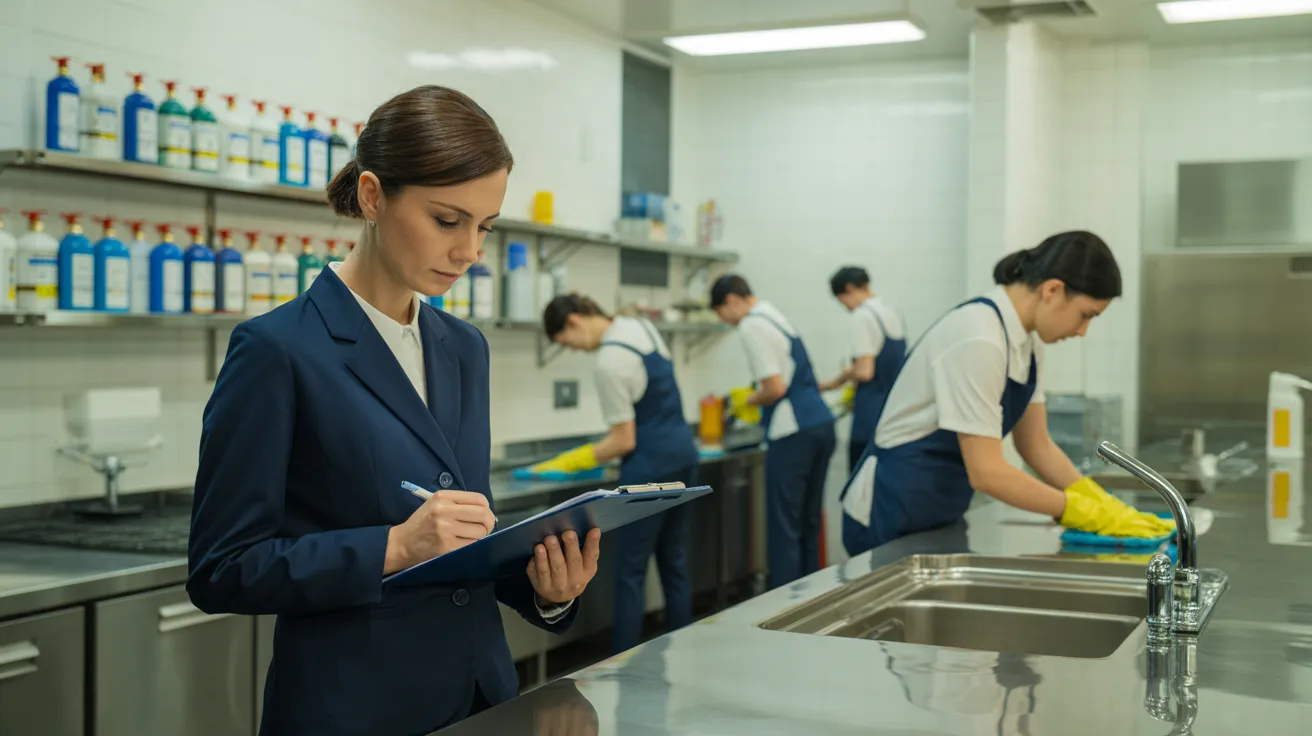
Essential Summary
- Brampton food safety cleaning experts service restaurants, grocery departments, commissaries, warehouses, bakeries, schools, mobile vendors, and allergen-sensitive operations.
- They disinfect high-touch surfaces, food-contact equipment, kitchens, floors, drains, restrooms, and storage areas using area-specific procedures to eliminate cross-contamination.
- Approved sanitizer dilution, appropriateness, and exposure duration are confirmed by approved contractors, with conclusion logged via checks, audits, and remedial documentation.
- Effective sanitation schedules take into account threat, production volume, changeovers, spills, and requirements when allocating routine, periodic, and cyclical tasks by zone.
- Insurance, colour-coded implements, HACCP, health regulatory expertise, safety training preparation, references, and audit-ready hygiene files are important contractor characteristics.
What Brampton Venues Require Food Safety Cleaning?
Brampton facilities that deal with, maintain, prepare, package, or provide food require food sanitation. Implement it find here if your establishment is covered by health reviews, food regulations, or HACCP protocols. The rule covers food venues, break rooms, supply centers, retail departments, butcheries, seafood areas, stores, and facility food prep.
Compliant food safety cleaning is necessary in distribution centers, manufacturing facilities, cold storage areas, bakery retailers, educational meal programs, banquet venues, and meal delivery services. Portable temporary ventures are included, like mobile kitchens, market vendors, and seasonal booths. Your facility needs recorded sanitation procedures when your employees process ingredients, portion ready-to-eat items, reheat products, or store allergens. In Brampton, sanitation is not optional; it constitutes lawful, operational, and customer protection standards.
What Services Do Brampton Cleaning Experts Provide?
You require experienced cleaning professionals who disinfect high-touch surfaces, kitchen spaces, floor areas, and restroom facilities to maintain food safety and public health requirements. These locations are prioritized because they carry the greatest contamination risk, slip and fall dangers, and regulatory breaches.
When you know their cleaning scope, you can verify that your facility's cleaning scope meets operational and regulatory requirements.
Disinfecting High-Touch Surfaces
base disinfection schedules determined by foot traffic, environmental hazards, and business activities.
Preventing cross-contact through rotating wipes, following one-way systems, and separating sanitization equipment by location confirms your sanitizing plan stays verifiable, documented, and audit-prepared.
Cooking Zones, Walking Surfaces, and Restroom Environments
Brampton cleaning services zero in on kitchens, floors, and restrooms as each zone involves different sanitation, accident, and public health risks. In industrial kitchens, you need degreasing on cook lines, equipment exteriors, drains, prep surfaces, and splash zones to reduce bacterial growth and pest activity.
Floor care that is recorded should also be anticipated. Technicians scrub and extract buildup from tile grout, ceramic surfaces, and vinyl floors, then apply correct drying techniques so you can limit falls and meet regulatory standards. They also handle entry points where dampness and dirt enter the building.
Restroom sanitation requires disinfecting touch areas, bathroom equipment, stall barriers, supply stations, and bins, replacing items and managing smells. They also service restaurant moprooms, where chemical storage, sink hygiene, and drainage conditions can affect sanitation compliance and staff safety daily.
The Importance of Food Safety Cleaning in Brampton
In Brampton, you must maintain sanitary cleaning practices to satisfy regulatory standards and pass inspections. You also minimize bacterial spread through proper cleaning of food-preparation surfaces, appliances, and frequently-touched items. Most importantly, you safeguard community wellness by reducing the chance of food poisoning in your establishment.
Health Code Compliance
Brampton food companies must comply with rigorous sanitary regulations, so hygiene maintenance is essential to satisfying health codes, protecting customers, and avoiding penalties. You must maintain clean food preparation areas, documented cleaning schedules, correct sanitizer application, and verifiable staff procedures that comply with municipal and provincial inspection expectations.
Detailed cleaning files enable you to prove due diligence during inspection audits and show your procedures remain uniform, replicable, and overseen. Comprehensive sanitation further promotes cross-contamination prevention by reducing residue on common tools and commonly contacted zones.
Contamination Prevention
Following regulatory requirements depends on your ability to prevent cross-contamination in routine food work and sanitation. You must separate raw ingredients from ready-to-eat foods, disinfect work areas after use, and store chemicals away from food-contact items. Well-defined guidelines decrease contamination chances and support consistent compliance during inspections.
You should establish allergen separation to prevent major allergens from touching shared surfaces, containers, or equipment. Use dedicated cutting boards, color-coded tools, and careful equipment identification so employees avoid combining products during preparation or service. Mandate washing hands following raw meat, seafood, eggs, or allergen-containing products. Replace wiping cloths regularly, and check disinfectant potency using test kits. When you train staff to follow these controls each work period, you build a more hygienic, secure workplace that meets Brampton's food safety expectations daily.
Public Health Protection
If proper sanitation deteriorates, you don't merely face potential inspection issues—you boost the probability of pathogenic contamination harming customers, staff, and the broader Brampton region. You also weaken your role in protecting public health, especially in busy food facilities where pathogens travel quickly through surfaces, equipment, and touchpoints.
You require sanitation systems that remove contaminants, disinfect appropriately, and validate outcomes. This requires following contact periods, using authorized sanitizers, logging schedules, and coaching employees to meet health-unit expectations. These measures prevent illness spread by decreasing microbial counts before reaching surfaces or food. Throughout Brampton, strong cleaning safeguards susceptible populations, minimizes disease potential, and proves your diligence. When you follow proper protocols, you go beyond requirements—you mitigate risk and enable safer food service throughout the area.
Why Is Cleaning Essential for Food Safety Compliance?
Establishing comprehensive cleaning schedules bolsters food safety compliance by decreasing contamination threats, managing pathogen expansion, and positioning your facility in accordance with sanitation requirements under HACCP-based programs and public health regulations. You verify that contact surfaces stay visibly clean and microbiologically controlled, facilitating documented preventive controls and inspection readiness.
Effective cleaning also strengthens allergen mitigation by clearing residues that can trigger undeclared allergen exposure. by clearing residues that can provoke undeclared allergen exposure.
How Do You Arrange Commercial Cleaning Work?
maintenance activities.
risk factors, production capacity, or regulatory standards are updated
What Should You Look For in Brampton Cleaning Experts?
Evaluate providers first by sanitation compliance standards rather than cost. You must ensure each provider understands CFIA, public health, and HACCP-aligned expectations for your business. Request proof of insurance, WHMIS compliance, staff training documentation, and supervision methods. Check technician understanding of cross-contamination risks, chemical handling, and traceable sanitation records.
Additionally, you need to evaluate service dependability and responsibility. Obtain references from food facilities in Brampton, then review service speed, corrective measures, and communication standards. Verify the company supports supplier audits and can deliver compliance-ready records when inspectors or external parties need proof. Verify equipment upkeep, colour-coded tools are applied correctly, and site-specific hazards are identified. A capable service protects compliance, product integrity, and your reputation.
What's covered in a Food Safety Cleaning Plan?
Document a plan that defines every sanitation activity, guideline, and role before production begins. You should include cleaning schedules, approved products, ratios, contact periods, tools, and validation approaches for each zone, surface, and piece of equipment. Ensure you include pre-operational inspections, corrective actions, and employee training requirements.
Your plan should also cover cross-contamination prevention, waste disposal, pest management measures, and scheduled documentation for restrooms, drains, floors, and food-contact areas. Clarify how you'll separate raw and ready-to-eat processes, help with ingredient tracking, and copyright accurate allergen labeling through validated cleaning between product changes. You should define accountability, maintain signed records, and review results against regulatory standards, HACCP controls, and customer requirements. When gaps appear, adjust procedures immediately and re-educate staff.
Frequently Asked Questions about the Plan
Do cleaning services operate during nighttime hours at Brampton properties?
Yes, you can book cleaning services to manage overnight shifts in Brampton facilities. You'll organize overnight sanitation around operational windows, security measures, and staffing requirements. Services generally map overnight logistics to reduce disruption, maintain standards, and document completed tasks. You should verify response times, management, lockout procedures, and waste handling before beginning service. If you operate regulated spaces, you'll also want cleaning records that support inspections and internal quality assurance.
Can sanitation professionals manage hazardous incidents?
Yes, you can find Brampton cleaning experts to offer emergency spill response solutions. They manage hazardous materials, assess risks, isolate affected areas, and start rapid decontamination to reduce exposure and operational disruption. You should confirm their response times, training certifications, PPE protocols, and waste management. If your facility must comply with industry standards, select a service that records events, follows compliant sanitation standards, and supports audit readiness.
Are green disinfectants appropriate for food-handling equipment?
Yes, green disinfectants can be secure for food-handling equipment if you opt for products labeled food safe and satisfying regulatory requirements. You should validate contact times, dilution rates, and rinse procedures before use. Many plant based formulas minimize harsh chemical exposure, but you still need confirmation of performance against relevant pathogens. To keep surfaces residue-free, you should follow manufacturer directions precisely and validate the sanitizer complies with food sanitation requirements.
Can maintenance plans adapt with seasonal variations?
Absolutely, maintenance plans are customizable for seasonal production changes. Adapt frequencies, staffing, disinfectants, and testing procedures to correspond to operational cycles while maintaining regulatory requirements. Reduce equipment downtime through scheduling sanitation amid production shifts, maximum output, and usage cycles. Additionally, update standard operating procedures, training, and facility monitoring to reflect transient threats, novel allergens, or elevated soil levels. Continuous reviews keep the plan current.
Do commercial cleaning providers coach your team in proper hygiene techniques?
Yes, professional cleaning services often train your team on sanitation best practices. You receive employee instruction on correct chemical application, exposure periods, cross-contamination prevention, machine breakdown, and documentation. They typically align training with HACCP, GMP, and CFIA or regional health department requirements. Many perform sanitation audits to verify compliance, spot deficiencies, and strengthen remedial steps. This helps you sustain uniform processes, succeed in audits, and reduce food safety risks daily.
Summary
Through working with Brampton food safety and commercial cleaning experts, you accomplish much beyond organizing—you ensure your facility for inspections and your standards meet requirements. From kitchen spaces to processing areas, all clean areas and organized zones reduce contamination risks and prevent significant costs. Through scheduling maintenance at proper intervals and adhering to a comprehensive cleaning program, you ensure protection for your team, clients, and your good name. Within strict regulatory frameworks, proper sanitation must be a priority—they represent good business practice.
Comments on “Expert Janitorial Services Ontario”